Why do Swedish-speaking Finns celebrate their heritage on November 6? The answer goes back to a 17th-century Swedish king, a political turning point in 1906, and a tradition that began in 1908.
Every year on November 6, Swedish-speaking Finns celebrate Svenska Dagen, Finland-Swedish Heritage Day. It is an official flag day honoring the Swedish language and culture in Finland. Swedish is one of Finland’s two national languages, and about 287,000 Finns (5% of the population) speak it as their native language.
How it began
Finland was part of the Kingdom of Sweden from 1249 to 1809, and Swedish remained the main language of government and culture for most of the 1800s. In the second half of the century, the Fennoman movement worked to make Finnish the country’s leading language. Swedish speakers who wanted to protect their language’s position became known as Svecomans.
The turning point came with the parliamentary reform of 1906. It introduced universal suffrage and gave Finnish speakers a much stronger political voice, which raised concern about the future of Swedish language and culture in Finland.
The Swedish People’s Party, founded that same year, responded with two initiatives: a cultural fund, Svenska kulturfonden, and a dedicated Swedish day. The goal of the day was to unite Swedish speakers across Finland and help preserve their cultural heritage.
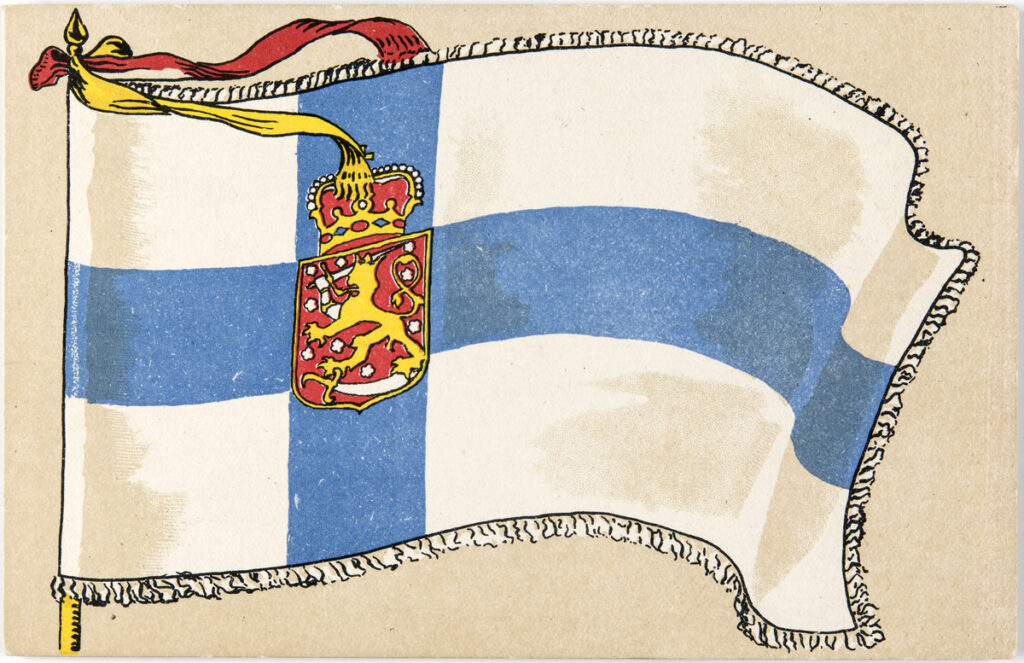
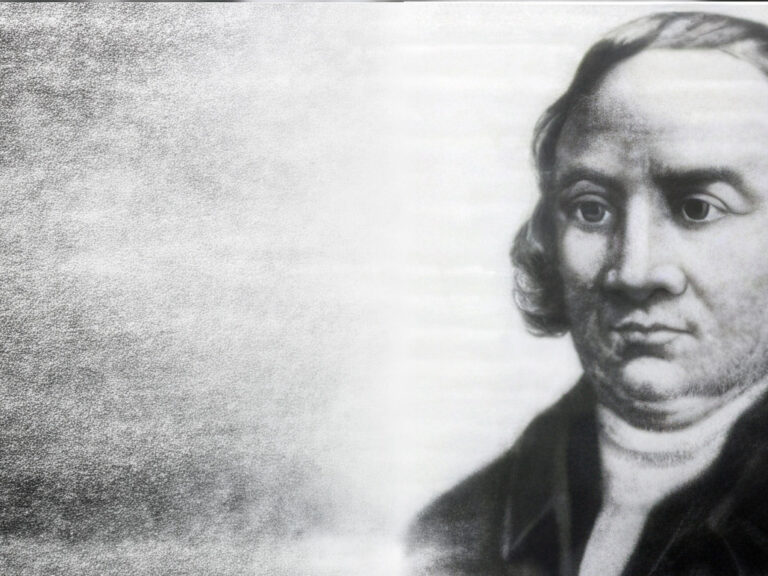
Postcard by E. Nyström, Helsingfors. Historical Picture Collection, Finnish Heritage Agency. Source
Why November 6?
The date comes from Swedish history. King Gustav II Adolf, who fell at the Battle of Lützen in Germany on November 6, 1632. Sweden’s era as a great power peaked during his reign from 1611 to 1632.
Swedes began honoring his memory with celebrations and pastries in the 1800s. In Sweden, the day is still known as Gustav Adolfsdagen. In Finland, the date took on a new purpose: bringing the Finland-Swedish minority together.
The first Svenska Dagen in 1908 was a grand affair. Formal events with music, speeches and large crowds were held in Swedish-speaking communities across Finland. Helsinki hosted three large celebrations, all sold out in advance: at the university’s ceremonial hall, at the Societetshuset, and at the Swedish Theatre. The evening ended with a torchlight procession to Senate Square, where around 10,000 people gathered.
Children selling Svenska Dagen badges
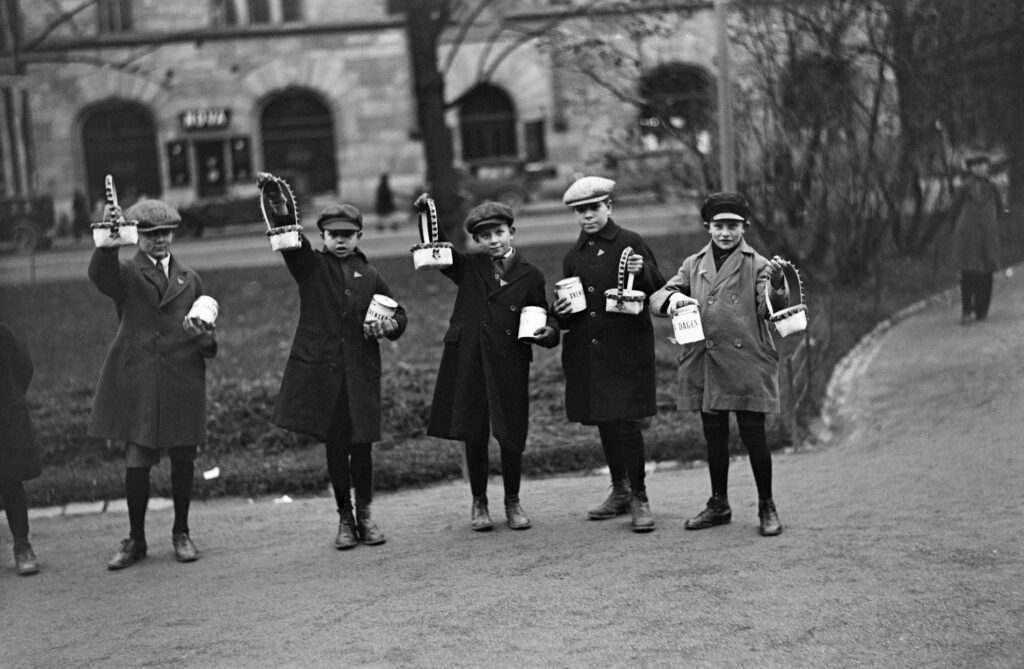
Svenska Dagen badge sellers in Esplanade Park, Helsinki (6 November 1929). Photo: Hugo Sundström, Press Photo Archive JOKA, Hufvudstadsbladet, Finnish Heritage Agency. Source
One of the best-known traditions began in 1909, when special Svenska Dagen badges were sold for the first time. The proceeds went to Svenska kulturfonden. In 1943, the Swedish Assembly of Finland (Svenska Finlands folkting) took over the main celebration and the badge sales along with it.
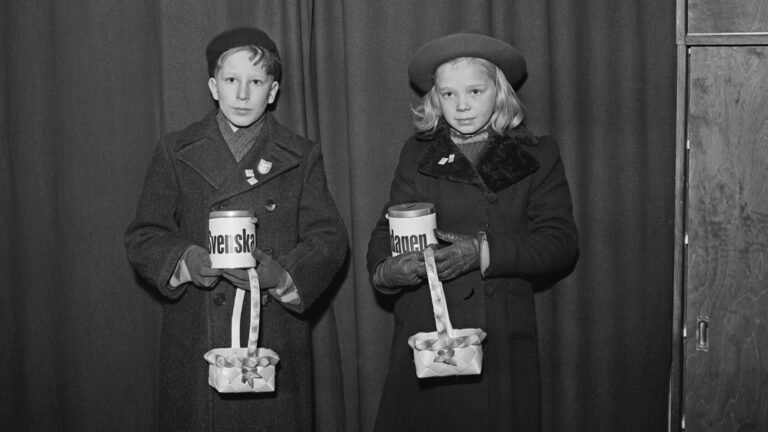
For decades, schoolchildren sold the badges on the streets, often starting the day before, on November 5. The tradition continued until the early 2000s. Today, the badges are handed out for free.
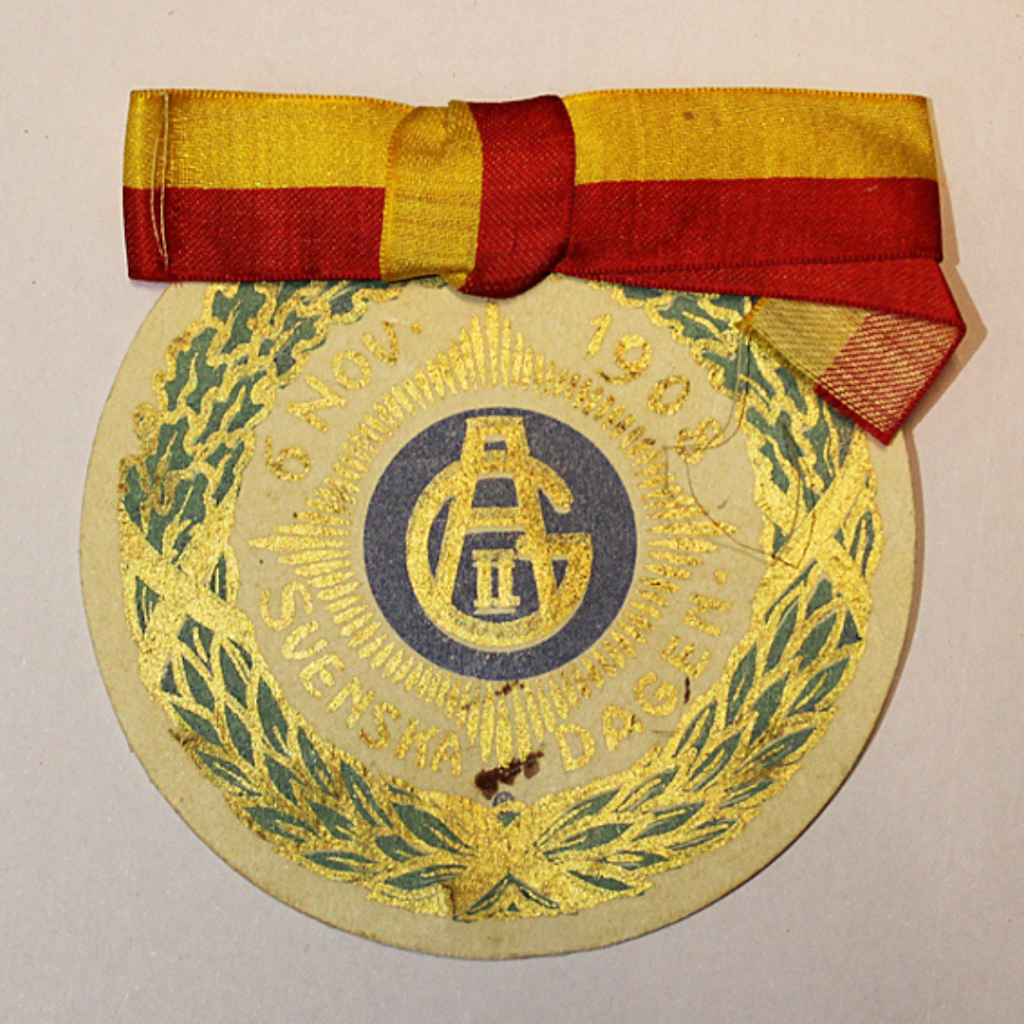
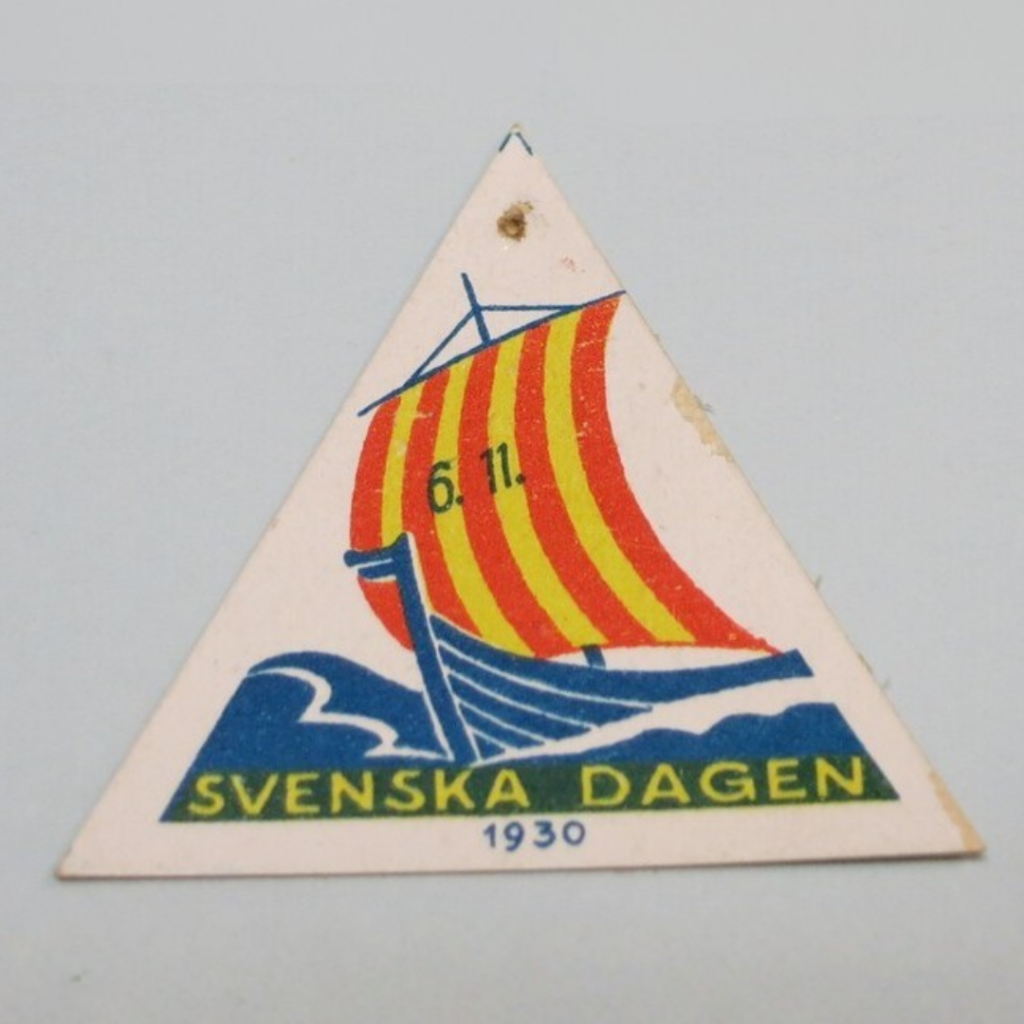
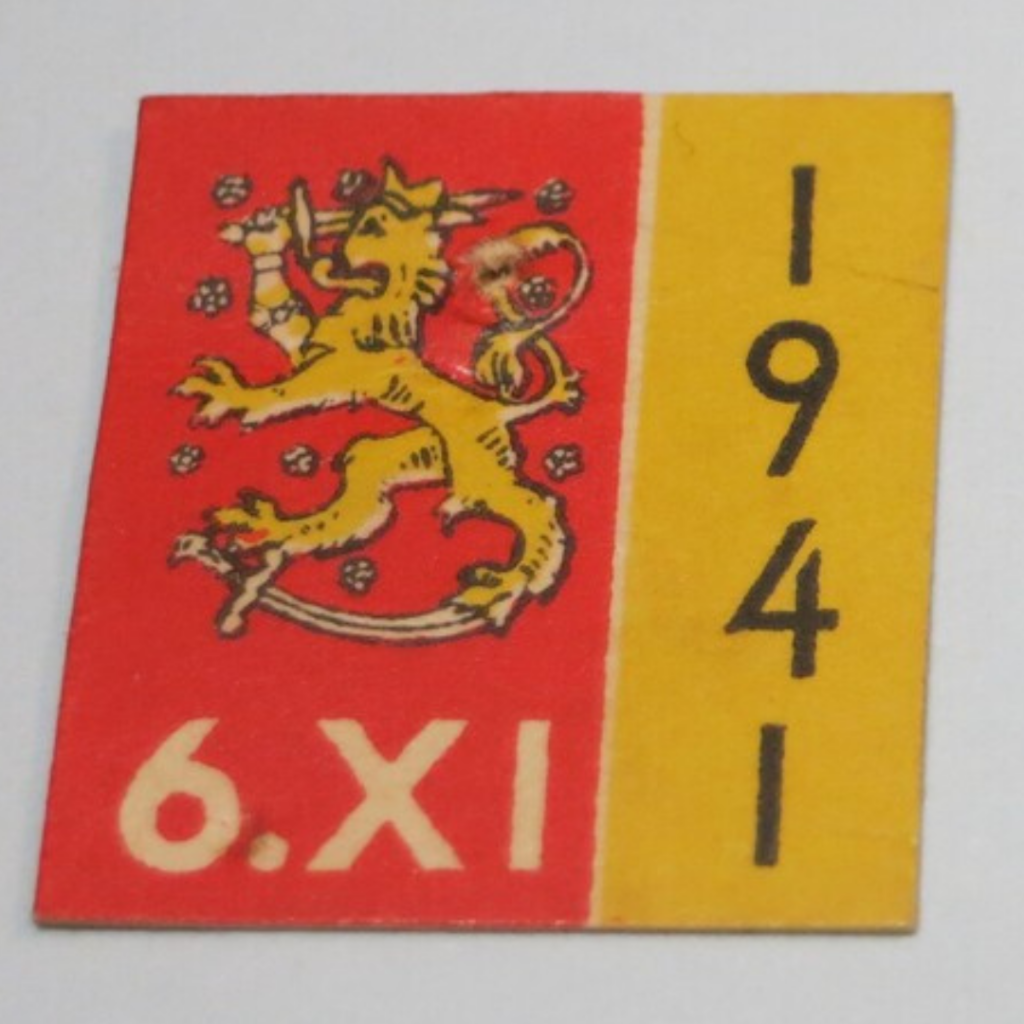
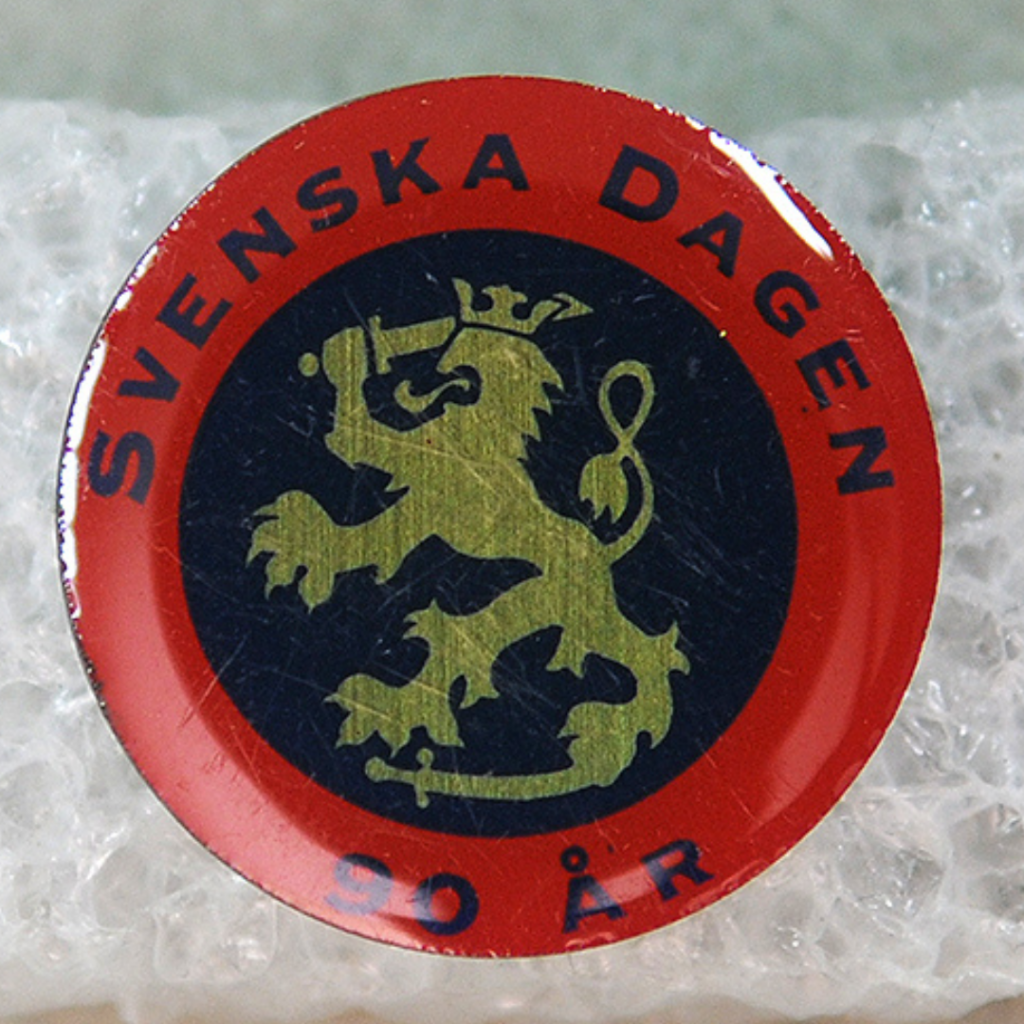
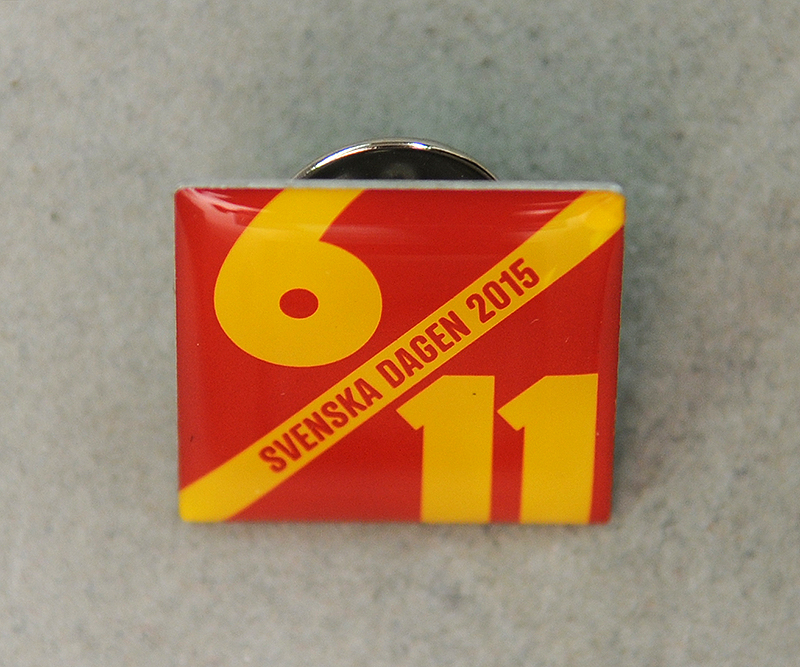
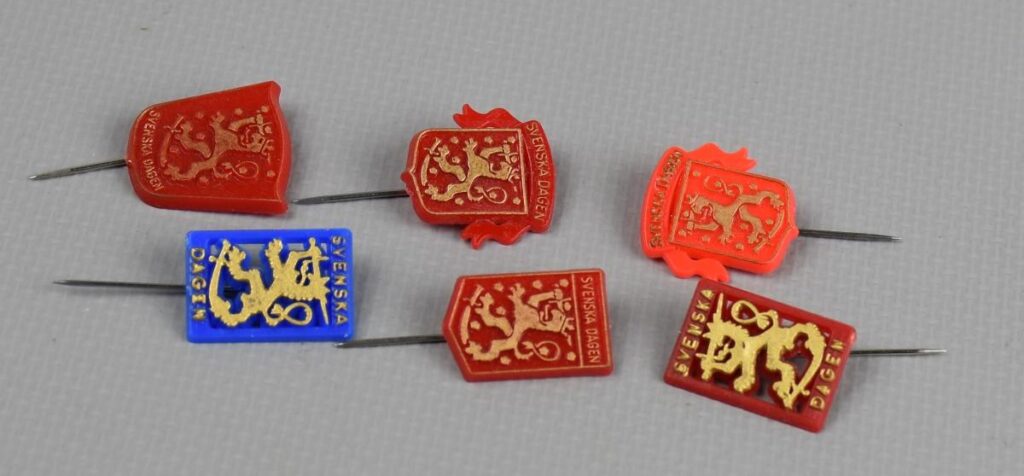
Svenska Dagen badge with the monogram GA II and a red and yellow ribbon (1908). Turku City Museum. Source / Svenska Dagen badge with a Viking ship (1930). Helsinki City Museum. Source / Svenska Dagen badge with the Finnish coat of arms (1941). Helsinki City Museum. Source / Pin celebrating the 90th anniversary of Svenska Dagen (1998). Turku City Museum. Source / Svenska Dagen pin with the date 6/11 (2015). Turku City Museum. Source / Svenska Dagen badges, date unknown. Etelä-Karjala Museum. Source
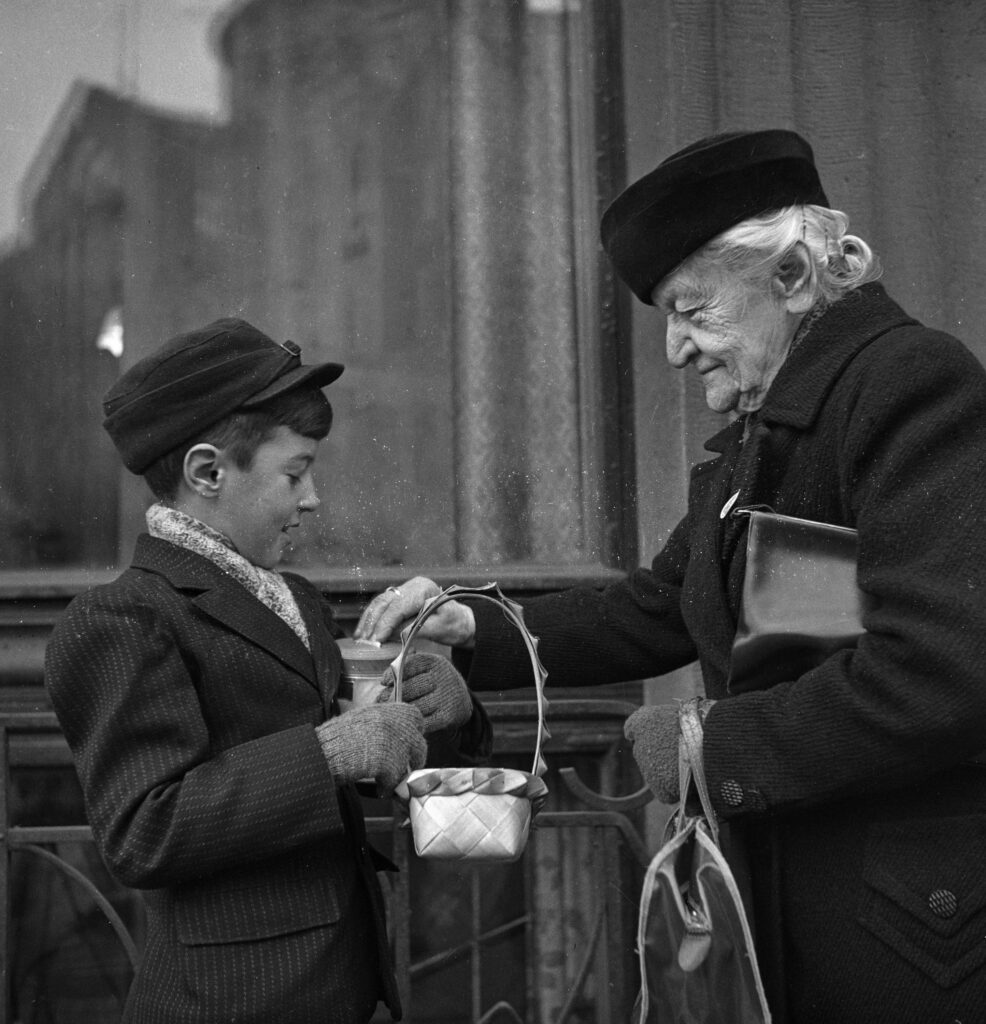
A boy selling Svenska Dagen badges in Helsinki (6 November 1947). Photo: Hugo Sundström, Press Photo Archive JOKA, Hufvudstadsbladet, Finnish Heritage Agency. Source
Svenska Dagen today
November 6 has been a recognized flag day in Finland since 1979. Besides raising the flag, people celebrate with parties and concerts, sing Modersmålets sång and eat pastries.
Many of the smaller celebrations around Finland are held in Swedish-speaking schools, where pupils gather to mark the day together. Around November 6, the Swedish Assembly of Finland organizes Svenska veckan, or Swedish Week, with cultural events in Swedish across Swedish-speaking Finland. The day is also celebrated by the Swedish-speaking minority in Estonia.
Modersmålets sång, “The Song of the Mother Tongue,” is often called the unofficial anthem of Finland’s Swedish speakers. Johan Fridolf Hagfors wrote both the words and the music as a commission for Akademiska Sångföreningen, Finland’s oldest choir, which first performed the song on May 13, 1898. It soon spread across Swedish-speaking Finland and was sung at the first official Svenska Dagen celebrations in 1908. Click here to listen to the song on YouTube (The Academic Male Voice Choir of Helsinki).
You don’t need to be in Finland to mark Svenska Dagen. Sing or listen to Modersmålets sång, bake something for coffee (click here to see our recipes), or tell someone about Svenska Dagen. However you decide to celebrate, we wish you a Glad Svenska Dagen!
Sources
Haglund, Pernilla & Björkstrand, Sixten: Därför firas svenska dagen. Svenska Yle, 3 November 2015, updated 6 November 2019.
Svenska nu: Svenska dagen. Teaching material.
Swedish Finn Historical Society: Svenska dagen.
Lüttge, Peter: Kommentar: Modersmålets sång är förlegad och olämplig som finlandssvenskarnas lystringssång. Svenska Yle, 6 November 2024 (commentary).
Cover photo: Svenska Dagen badge sellers in Helsinki (5 November 1941). Photo: Press Photo Archive JOKA, Hufvudstadsbladet, Finnish Heritage Agency. Source