A surname is often the first clue to a family’s past. This guide explains the main types of Swedish Finn surnames, how they were formed and what they can tell you about your ancestors.
Almost every family history begins with the same question: where does our name come from? For descendants of Swedish-speaking Finns, the answer is often more surprising than a simple translation. Your surname may be a father’s first name, a farm in Ostrobothnia, a soldier’s nickname, a priest’s Latin invention, or a fashionable nature name picked because it sounded good.
This guide sorts Swedish Finn surnames into types and explains what each type means. The example names come from Tuomas Salste’s Släktnamn-info database. The database covers 25,463 surnames borne by at least 20 Finnish citizens in 2025, compiled automatically from public lists, statistics and research reports. The history of name types is based mainly on Uppslagsverket Finland, a Swedish-language encyclopedia of Finland whose surname article is by name researcher Marianne Blomqvist.
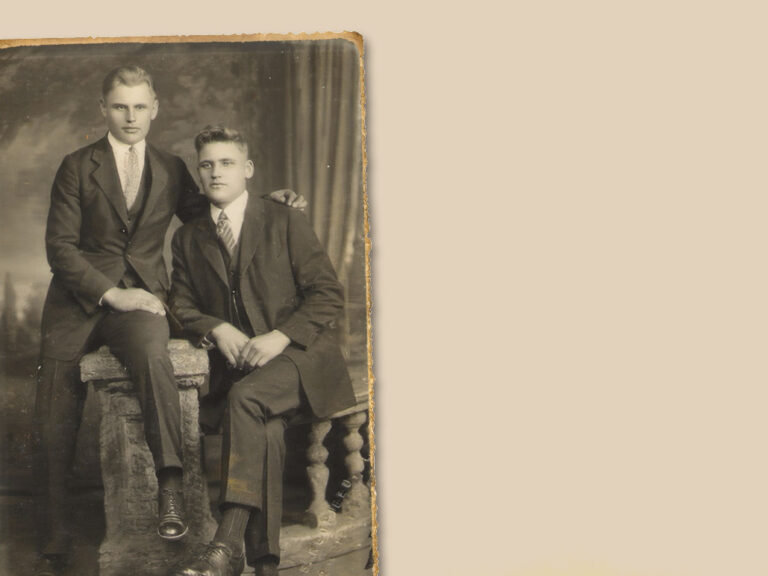
The photos in this article come from Finna, a Finnish online service that brings together the collections of museums, libraries and archives. Many of them are cartes de visite, small portrait photographs mounted on card that were popular in the late 1800s and that family and friends exchanged with each other.
In this guide: Patronymics · Farm names · Nature names · Soldier names · Clergy and scholars’ names · Noble names · Emigrant names
Surnames Are a New Phenomenon
Hereditary family names came late to the Nordic countries. The exception was the Finnish-speaking population of eastern Finland, where family names had a long tradition, according to Blomqvist. In western Finland, surnames spread down the social ladder: first the clergy, burghers, soldiers and craftsmen, and last the farming population.
For rural Swedish Finns, the final step came very late. The process began in the mid-1700s and in some cases ended only on 1 January 1921, when Finland’s surname law took effect. Some emigrants who left before 1921 therefore had no fixed surname in the modern sense at all. That explains many of the puzzles in American family trees.
Patronymics: “son of” and “daughter of”
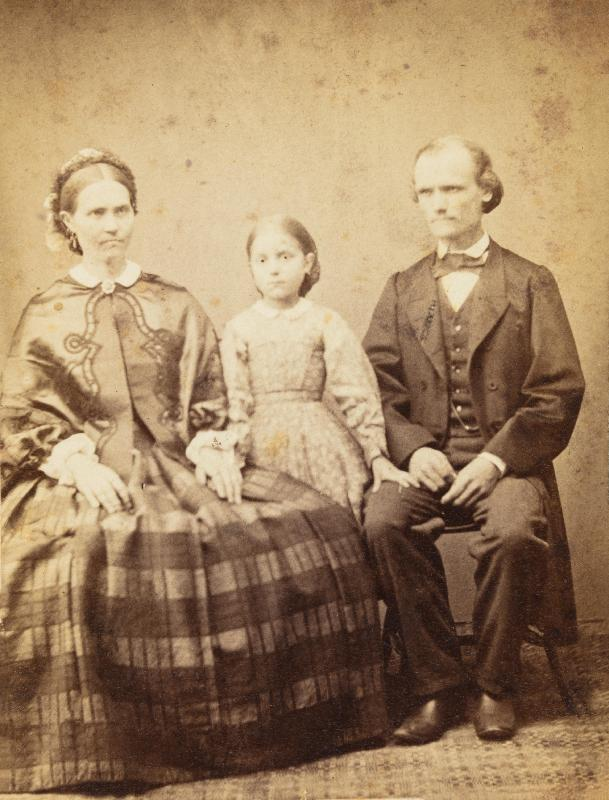
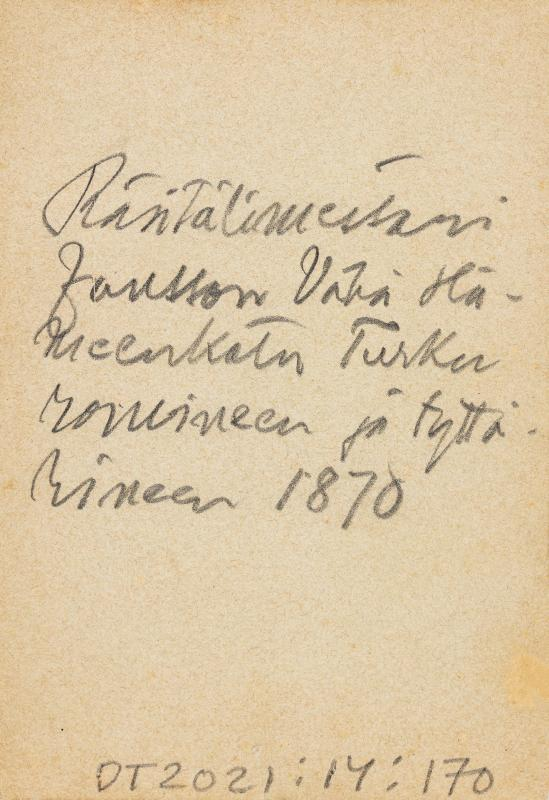
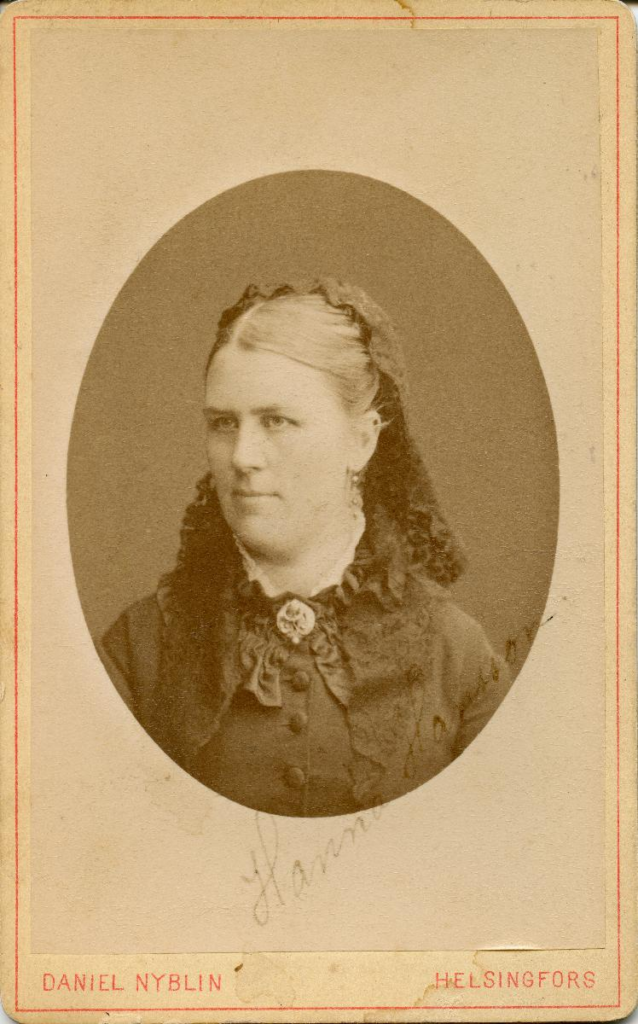
Master tailor Jansson with his wife and daughter, Turku, 1870. Original photo: J. Reinberg, Turku City Museum. Source / Hanna Hansson, carte de visite. Photo: Daniel Nyblin, Loviisa Town Museum. Source
Examples: Andersson, Carlsson, Eriksson, Hansson, Johansson, Mattsson, Nilsson, Olofsson, Persson, Svensson.
A patronymic comes from the father’s first name. Johan’s son became Johansson and Johan’s daughter Johansdotter. Blomqvist notes that patronymics ending in -son and -dotter were the most common way to identify people in the Middle Ages. Because the patronymic changed every generation, a father, his son and his daughter could all carry different “surnames”.
The meaning is simple, but it says almost nothing about the family itself. Thousands of unrelated people were “Andersson”. Patronymic names are especially typical of Åland.
A rural emigrant’s papers often gave a first name, a patronymic and a farm name, such as Johan Eriksson Nygård. In America, people treated the patronymic as a surname, so the emigrant had to choose between the two. Of 324 Ostrobothnian emigrants who came before 1930, 29% took a -son name. If your family is named Johnson or Carlson, the real family identifier may have been a farm name that was left behind.
Patronymics still dominate the top of the list. According to Salste, in March 2020 the five most common Swedish surnames in Finland were Johansson, Andersson, Karlsson, Eriksson and Nilsson.
Farm names
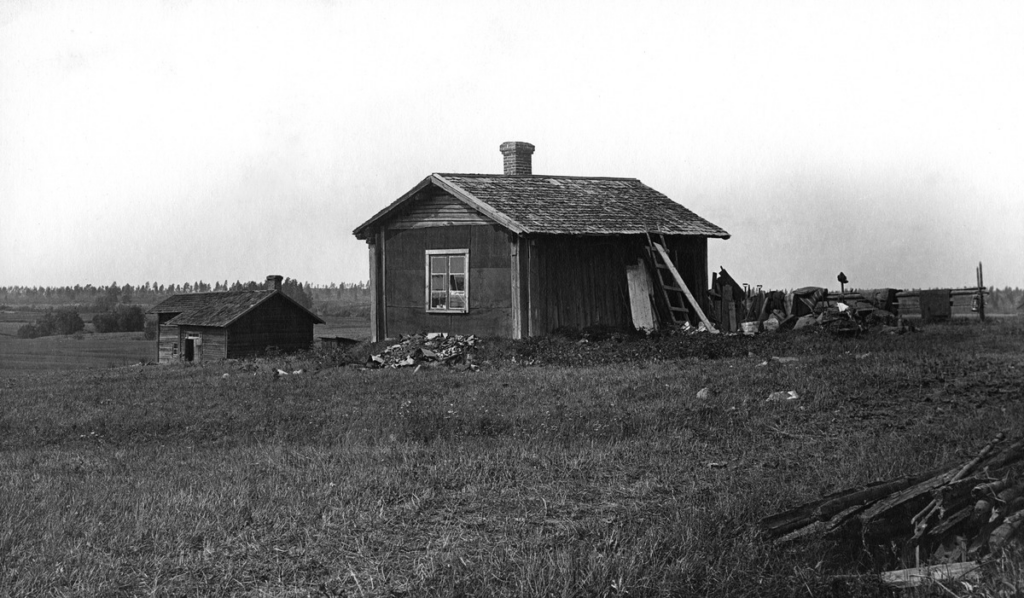
A croft on Elanto’s Backas manor, 1910s–1920s. Photo: Eric Sundström, Helsinki City Museum. Source
Examples: Antfolk, Bergbacka, Borgmästars, Lillbacka, Norrgård, Östergård, Mattfolk, Klockars, Snickars.
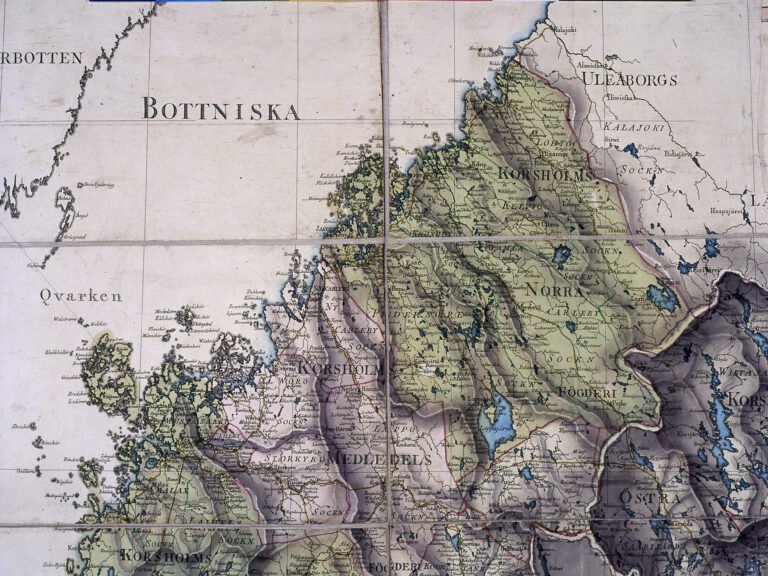
This is the most characteristic Swedish Finn name type. In Ostrobothnia, people were identified by the farm (in Swedish hemman) they lived on, and in 1921 many families made that farm name their permanent surname.
According to Blomqvist, in eastern Nyland and Ostrobothnia, where the farm names had long served as identification, many families settled on the farm name as their surname in 1921. Many of these also include Swedish words, such as stor (big), lill (little), lång (long), sten (stone), häst (horse), smed (smith) as well as norr (north), söder (south), vester (west) and öster (east).
Farm names are often built from a landscape word, a first name or an occupation:
- -backa means a slope or hill. Bergbacka combines berg (mountain, hill) and backa, so it describes a farm on a hillside.
- –bäck means a brook. A Bjurbäck farm would therefore be named after a brook.
- -folk means people or household. Names like Mattfolk and Antfolk appear to combine it with a first name or its short form.
- Names ending in -s, such as Klockars and Borgmästars, look like possessive forms of an occupation: klockare is the parish clerk or sexton, borgmästare the mayor. Whether a particular farm really got its name from such a person can only be confirmed by local history.
More than any other type of surname, a farm name points to a real place. Many of the long farm names emigrants abandoned in America were genuine old Ostrobothnian farm names, some going back to the 17th century. Farm names also turn up in records at different times. The Society of Swedish Literature in Finland (SLS) points out that many farm names first appear in records in the late 1600s, although some are certainly considerably older.
Looking for your family’s farm? Search the villages and farms of Swedish-speaking parishes in Finland in the SFHS Parish Primer.
Nature names
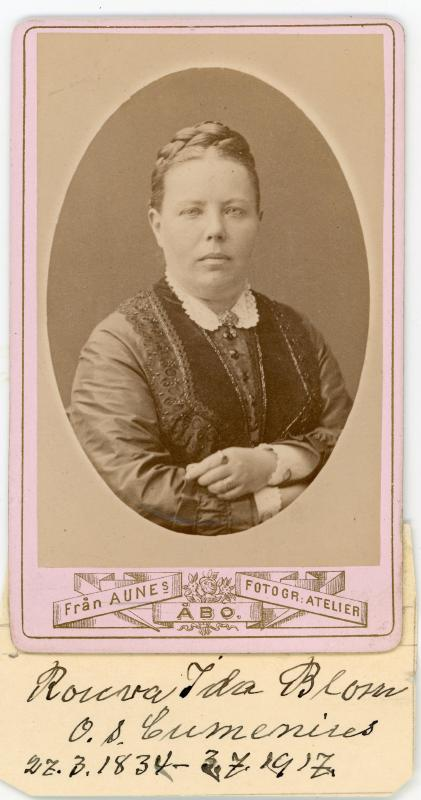
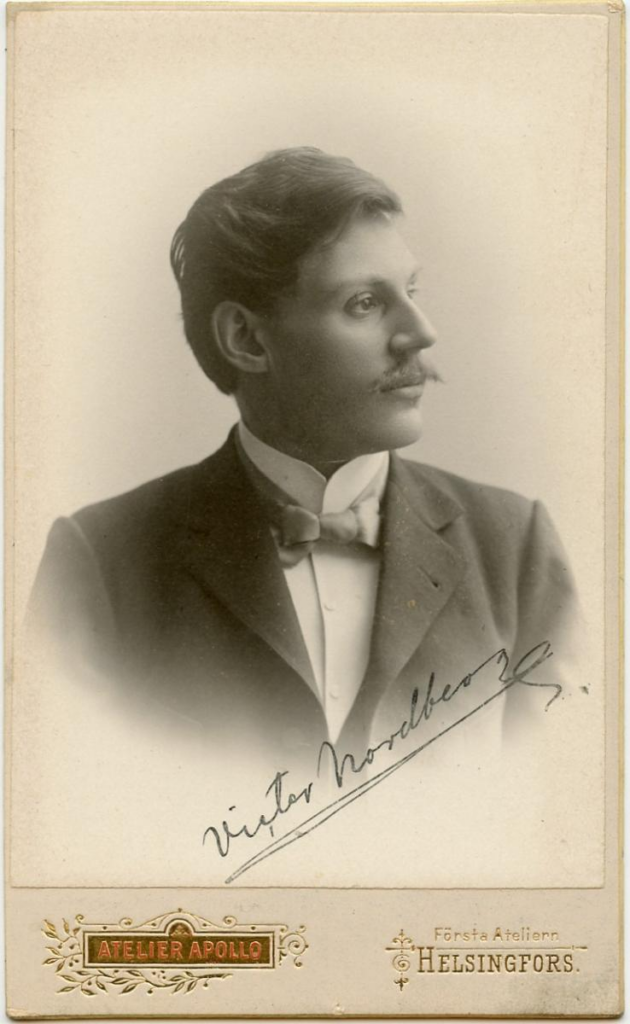
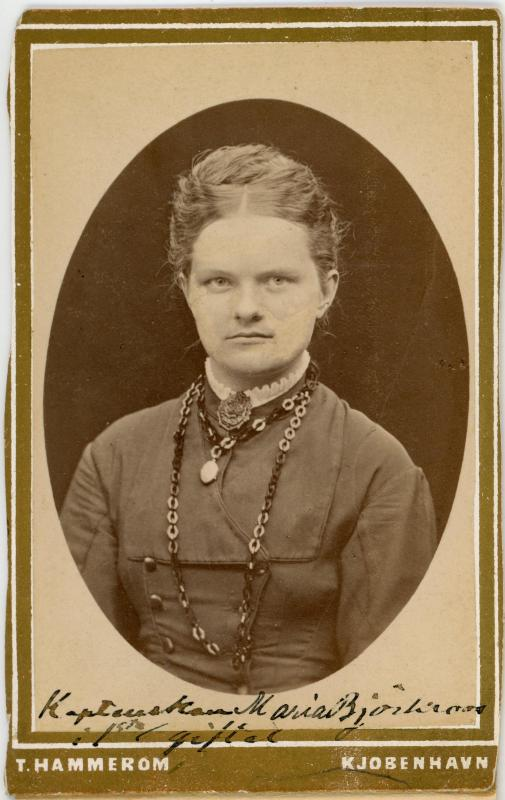
Ida Blom, née Cumenius, carte de visite. Photo: Aune’s Fotografi Atelier, Uusikaupunki Museum. Source / Victor Nordberg, carte de visite, 1901. Photo: Atelier Apollo, Loviisa Town Museum. Source / Maria Helena Björkros, née Westergren, carte de visite, Copenhagen. Photo: unknown, Uusikaupunki Museum. Source
Examples from: Ahlskog, Aspholm, Björklund, Blomqvist, Grönroos, Nyman, Sjöblom, Strandberg, Westerlund, Wikström.
According to Blomqvist, native burghers began taking surnames in the late 1600s, often following German models. The earliest second element was -man, as in Backman, Bergman and Ekman. Names in -berg came next, then -ström, -lund and -qvist, after which all kinds of nature words came into use.
Berg, blom, dal, gren, holm, lund, roos and ström worked both as the first and the second part of a name. The same source notes that the burghers’ and soldiers’ surnames often served as models for the rural population in Swedish-speaking and bilingual areas. In western and central Nyland, burgher-type names came to dominate, such as Fagerström, Lindqvist and Westerlund.
While the place where the family lived may have inspired the names, they do not say much about the place in question. Ulf Berggren notes in his article in the Swedish genealogy magazine Släkthistoria that a name beginning with Berg- says little about any particular place, because countless places and farms are called Berg or Berga.
Common name elements:
| Element | Meaning | Element | Meaning |
| ahl / al | alder | lind | linden |
| asp | aspen | lund | grove |
| berg | mountain, hill | man | man |
| björk | birch | näs | headland |
| blom | flower | qvist / kvist | twig |
| dahl / dal | valley | sjö | lake |
| ek | oak | skog | forest |
| fors | rapids | strand | shore |
| gren | branch | ström | stream, current |
| holm | islet | vik | bay |
With the table, Björklund reads as “birch grove”, Aspholm as “aspen islet” and Blomqvist as “flower twig”.
Soldier names
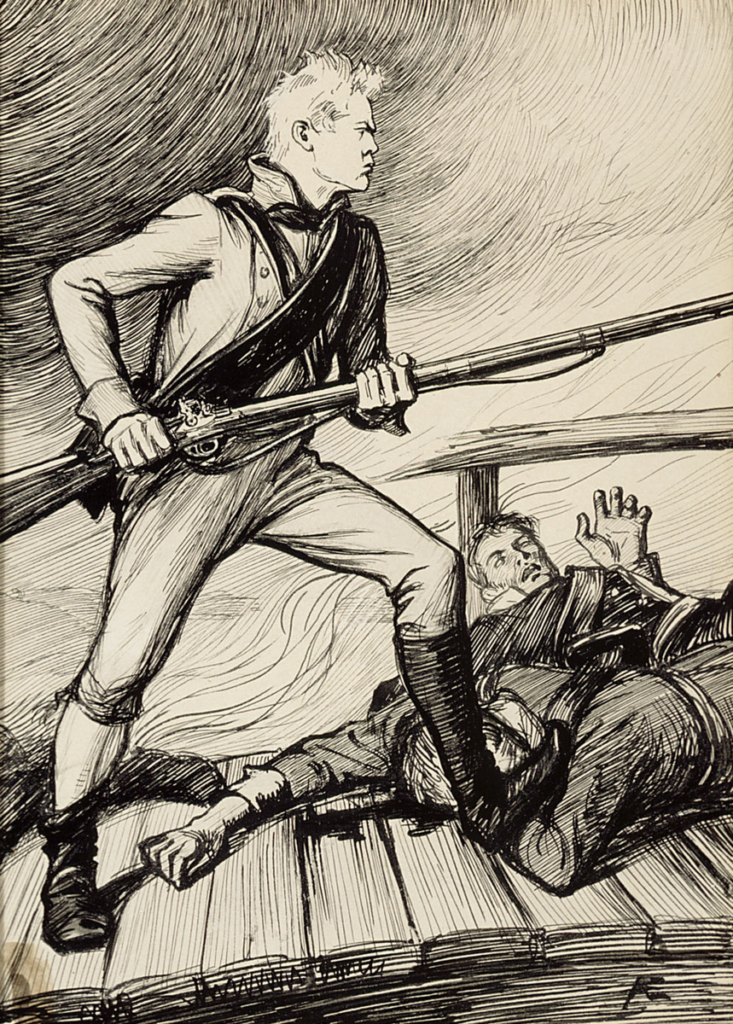
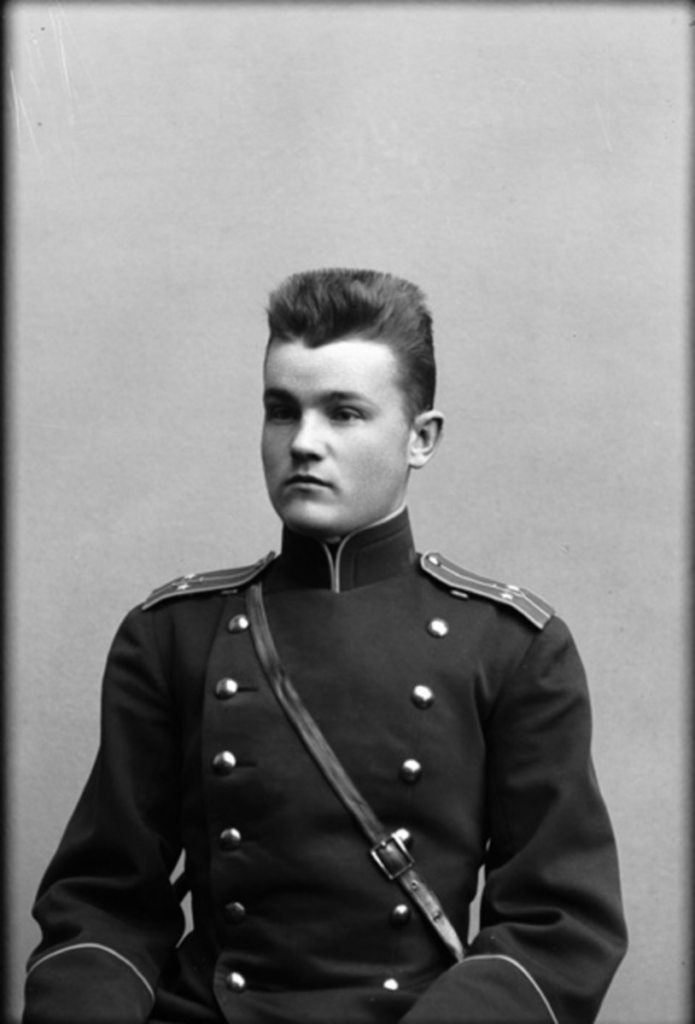
Sven Dufva on the Bridge. Original drawing for The Tales of Ensign Stål, 1897–1900. Albert Edelfelt, Finnish National Gallery, Ateneum Art Museum. Source / Lieutenant Adalbert Sabel, Kuopio, 1900. Photo: Victor Barsokevitsch, Kuopio Museum of Cultural History, Barsokevitsch Studio Collection. Source
Examples: Käck, Hjärpe, Lejon, Lilja, Palm, Malm, Kämpe, Spelman, Spring, Gåpå, Granat, Kruut, Sabel, Modig, Svärd.
Historian Arne Ekman explains that in the Swedish-era army, a regiment could have dozens of men called Matts Johansson. Therefore, soldiers were given names to tell apart men who shared the same patronymic. Blomqvist describes them as names assigned by officers to both Swedish and Finnish soldiers, sailors and dragoons in the Swedish allotment army.
The names were short, often one syllable. Many praised a soldier’s qualities, such as Frisk (healthy), Modig (brave), Stark (strong) and Flink (quick). Others referred to occupations (Spelman, “musician”), looks (Svart, “black”) or weapons (Sabel, “saber”). Most were taken from nature, and new names were made by combining short ones, such as Granholm, Lindberg and Lindqvist. These are less recognizable and often coincide with identical burgher names.
In Sweden, a soldier’s name was also tied to his post. Berggren notes that a soldier often changed his name when he moved to a new unit, and soldier names became family names only in the late 1800s.
Clergy and scholars’ names
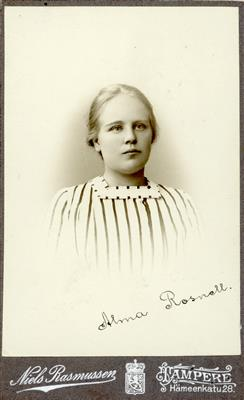
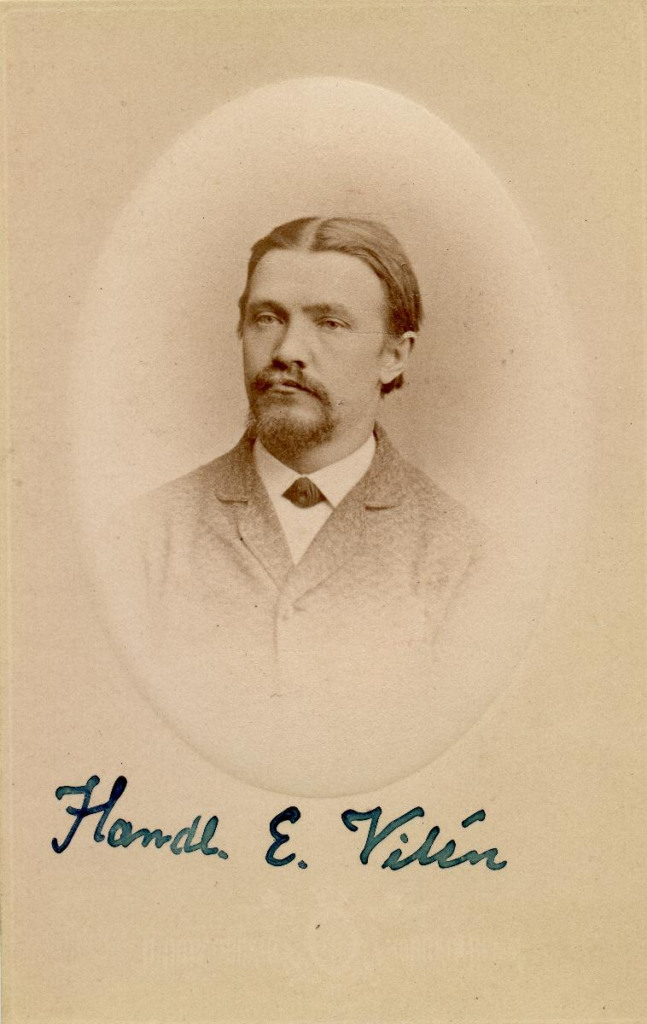
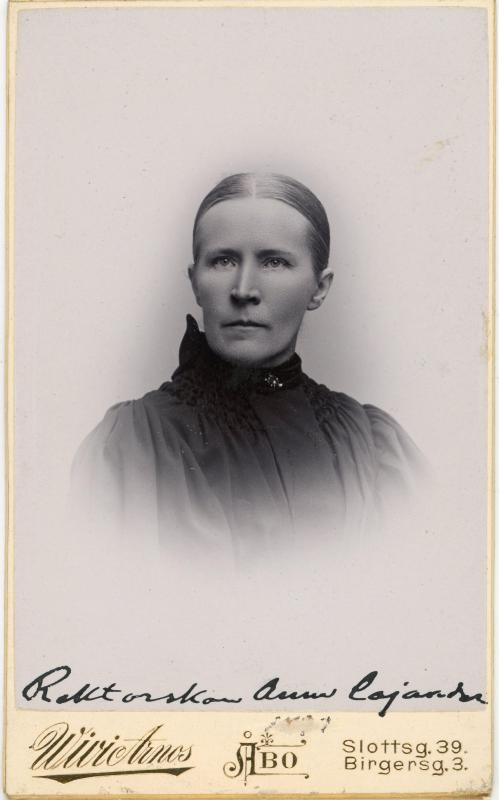
Alma Rosnell, carte de visite. Photo: unknown. Lempäälä-Seura, Kuokkala Museum Lane collection. CC BY-NC-ND 4.0. Source / Merchant Emil Vilén, carte de visite. Photo: unknown / Loviisa Town Museum. CC BY 4.0. Source / Anna Cajander, carte de visite. Photo: Wivi Arnos / Uusikaupunki Museum. Source
Examples:
- Latin -ius: Alenius, Bergius, Topelius
- Greek-style -ander: Alander, Cajander, Nylander
- French-style -én and -ell: Antell, Castrén, Hellén, Lindell
Students and clergy created learned names. According to Blomqvist, one pattern added the Latin ending -(i)us to the name of the bearer’s home: Toppelius (later Topelius) from Toppila, and Anthelius from Anttila. The ending -ander comes from a Greek word for “man”, so Nylander means “the man from Nyland”.
Fashion later changed these names again. When French replaced Latin as the language of the upper classes in the early 1700s, many clerical families dropped the -(i)us ending and moved the stress to the last syllable: Castrenius became Castrén, and Anthelius became Antell. The new endings -an, -én, -in and -ell soon came to be used for creating new names.
Such a name suggests that an ancestor attended school or university at some point. Berggren notes that in Sweden a name like Sundelius suggests a clergyman father, and that names ending in -ell can also point to a church background. The same article warns that a foreign-sounding name, for example one with a French accent mark, does not have to mean the family came from another country.
Noble names
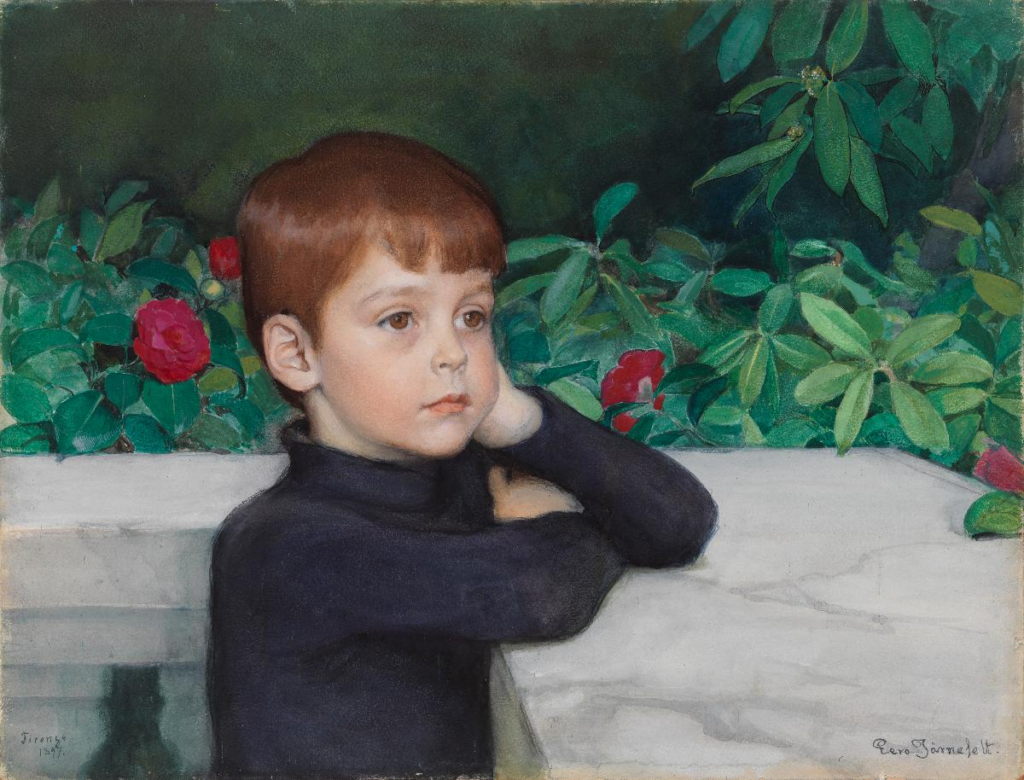
Portrait of the Artist’s Son (Heikki Järnefelt), 1897. Eero Järnefelt, Finnish National Gallery, Ateneum Art Museum. Source
Examples: Adlercreutz, Bergenheim, af Hällström, Järnefelt, Munsterhjelm, Segerstråle, Wasastjerna, von Wright.
According to the Finnish House of Nobility (Finlands Riddarhus), 357 families have been introduced to the House over its history. Of the 142 families still living in Finland, 3 are comital, 24 baronial and 115 untitled noble families. The House of Nobility’s website has an alphabetical list of all the introduced families, with a short description and the coat of arms of each.
Noble names were often created at the moment of ennoblement. The Finnish House of Nobility explains that a newly ennobled person commonly took a new family name, and until the 1700s a simple announcement was often enough to take a new surname, since surnames were hardly used outside the nobility.
Some of the oldest noble names came from the family’s coat of arms. Blomqvist explains that the Creutz family from eastern Nyland took its name in the first half of the 1600s from a St Andrew’s cross in its arms, and the Svinhufvud family carried a boar’s head (svinhuvud) in its shield. She adds that a prefix von or af was sometimes placed before the name.
Blomqvist states that in the 1800s, more and more ennobled families chose to keep their original “bourgeois” surname. That is why a surname alone is no proof of nobility: the same family can have both noble and non-noble branches. Berggren points out that in Sweden there are several families that share a name with a noble family, such as smith families named Stålhammar.
Emigrant names
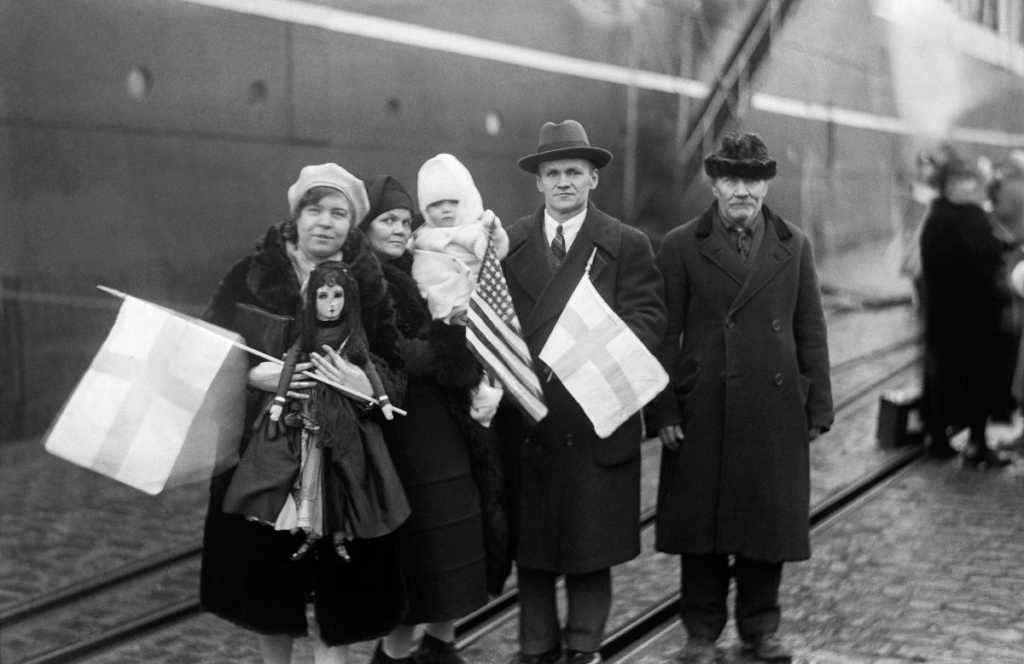
Finnish Americans in Helsinki, 20 December 1929. Photo: Hugo Sundström, Finnish Heritage Agency, JOKA Press Photo Archive, Hufvudstadsbladet. Source
Examples: Nygård → Nygard, Häggblom → Haggblom, Grandholm → Holm, Söderlund → Lund, Nyman → Newman, Hellqvist → Hill.
According to Blomqvist, Swedish Finn emigrants often tried to keep their original names, and adjusted them only when they had to suit English spelling and pronunciation. Because Swedish and English are related languages, many Swedish Finn surnames were easy for Americans to learn. Names like Berg, Eklund, Holm and Slotte stayed the same, although Americans pronounced them in their own way.
The most common change was spelling. The letters å, ä and ö were replaced, and Swedish v often became w. Long names were shortened, such as Grandholm to Holm. Some were translated or reshaped, such as Nyman to Newman or Söderlund to Sutherland, but this was rare because most emigrants did not yet know English. Old Ostrobothnian farm names such as Gästgivars and Smedjebacka were often dropped completely, usually in favor of a -son name.
For a closer look at what happened to Swedish Finn names in America, read Swedish Finn Surnames in America on the SFHS website. The article, translated by June Pelo from Marianne Blomqvist’s research, includes many more examples of emigrant names before and after the journey.
How to research your own surname
- Check how common the name is in Finland in Tuomas Salste’s Släktnamn-info. Note that the site covers names, not individual families, and the author cannot provide information about single names or families.
- Look up the village or place behind a farm or place name in SLS’s Finlandssvenska bebyggelsenamn database.
- Follow the farm name in parish records through HisKi and the SFHS Parish Primers.
- Search the SFHS DEE database for emigrants from your family’s parish (members only).
- Find out how a Swedish Finn surname is pronounced in the Institute for the Languages of Finland’s pronunciation guide. The alphabetical list gives a written pronunciation and an audio clip for each name. The page is available in Swedish and Finnish. To read it in English, use your browser’s translation feature, such as Google Translate.
Can’t work out your name? As a SFHS member, you get 3 hours of free genealogy help every year as well as Swedish language translation help. Click here to learn more about SFHS membership!
Sources
Blomqvist, Marianne (1990). Finländska adelsnamn. In Nordistik i 150 år. Available in SukuHaku, Genealogical Society of Finland. https://sukuhaku.genealogia.fi/#bookid=1203
Blomqvist, Marianne. Släktnamn. Uppslagsverket Finland. https://www.uppslagsverket.fi/sv/view-170045-Slaektnamn
Blomqvist, Marianne (1983–1984). Finland-Swedish Surnames in America. Finnish Americana. Available in SukuHaku, Genealogical Society of Finland. https://sukuhaku.genealogia.fi/#bookid=1199
Ekman, Arne (1954). Om soldatnamn. Genos 25, pp. 1–6. Available in SukuHaku, Genealogical Society of Finland. https://sukuhaku.genealogia.fi/#bookid=1181
Finlands Riddarhus / Finnish House of Nobility. https://www.ritarihuone.fi/en/
Finlands Riddarhus / Suomen Ritarihuone. Suvut ja vaakunat [list of introduced families]. https://www.ritarihuone.fi/fi/ritarihuoneesta/suvut_ja_vaakunat/
Salste, Tuomas. Släktnamn-info: surnames borne by at least 20 Finnish citizens. https://www.tuomas.salste.net/suku/nimi/index-sv.html
Släkthistoria (2015). Efternamn. Släkthistoria 1/2015. https://slakthistoria.se/slaktforskning/namn/efternamn/
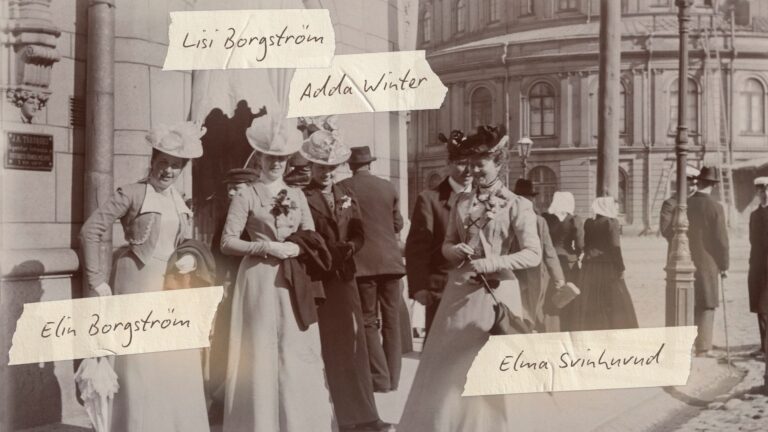
Cover photo: Pedestrians at the Wulff corner, Helsinki, around 1900. From left: Elin and Lisi Borgström, Adda Winter and Elma Svinhuvud. Unknown photographer, Helsinki City Museum. Photo has been edited to add name tags. Source