In Finland, the end of October has always been a time to mark the turning of the year and remember those who came before. Halloween is only the latest custom to find a place in that season.
American-style Halloween is a relatively new addition to the Finnish tradition. While emigrants in America reported on Halloween parties as early as 1908, and mentions of the holiday appeared in Finnish newspapers in the 1950s, it was not until the 1990s that Halloween as we know it today started to gain popularity. However, the end of the harvest season had always been a meaningful milestone in the Nordic calendar, rich with its own folk beliefs.
Before Halloween, There Was Kekri
Long before Halloween arrived, Finns celebrated kekri, an old harvest festival that marked the turning of the agricultural year. Kekri had no fixed date. Each farm celebrated once its autumn work was done, with feasting, mischief and rituals meant to foretell the coming year. Care was also taken not to offend the household spirits or the souls of the dead. In some places the celebrations lasted two weeks.
Kekri also had its own precursor to trick-or-treating. Young people would dress up in fur coats turned inside-out and birch-bark masks, taking on the persona of kekripukki (the Kekri goat). They roamed from farm to farm demanding hospitality, offering blessings in exchange for food and drink—or threatening playful mischief if turned away empty-handed.
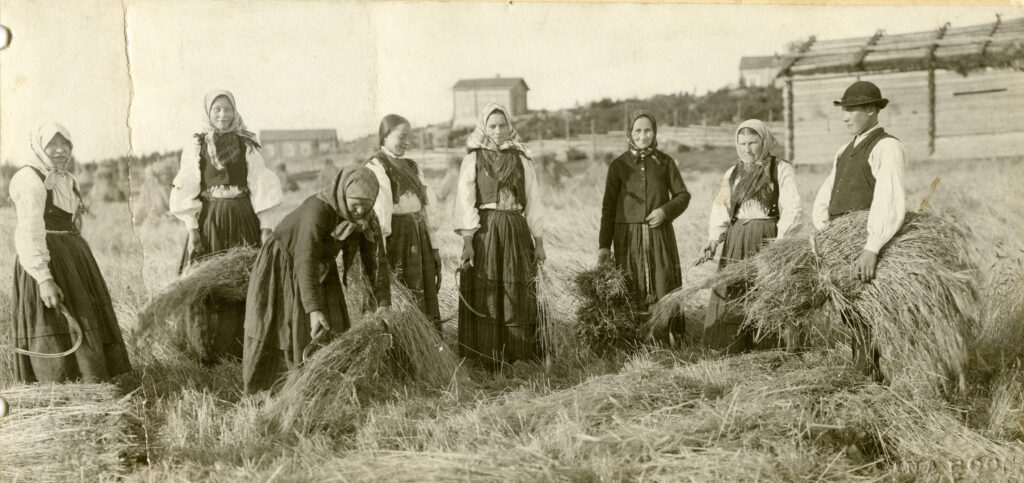
Harvest scene in Tjöck, Kristinestad (1890). Photo: Ina Roos, Svenska litteratursällskapet i Finland. Source
The Early Days of Halloween in Finland
As Christianity spread, many kekri customs moved toward Christmas. In late autumn, Finns began to celebrate All Saints’ Day, Allhelgonadagen, a day for remembering the dead. Since 1955, it has been held on the Saturday between October 31 and November 6.
On All Saints’ Day, families bring candles to the graves of their loved ones, and by evening there are thousands of small flames glowing in the dark. Many cemeteries also have a memorial place for loved ones buried elsewhere.
Finnish emigrants were the first to write home about Halloween. In fact, Finnish-language newspapers in North America mentioned it as early as 1908, usually in notices for parties raising money for local societies. However, the custom itself did not travel back with them.
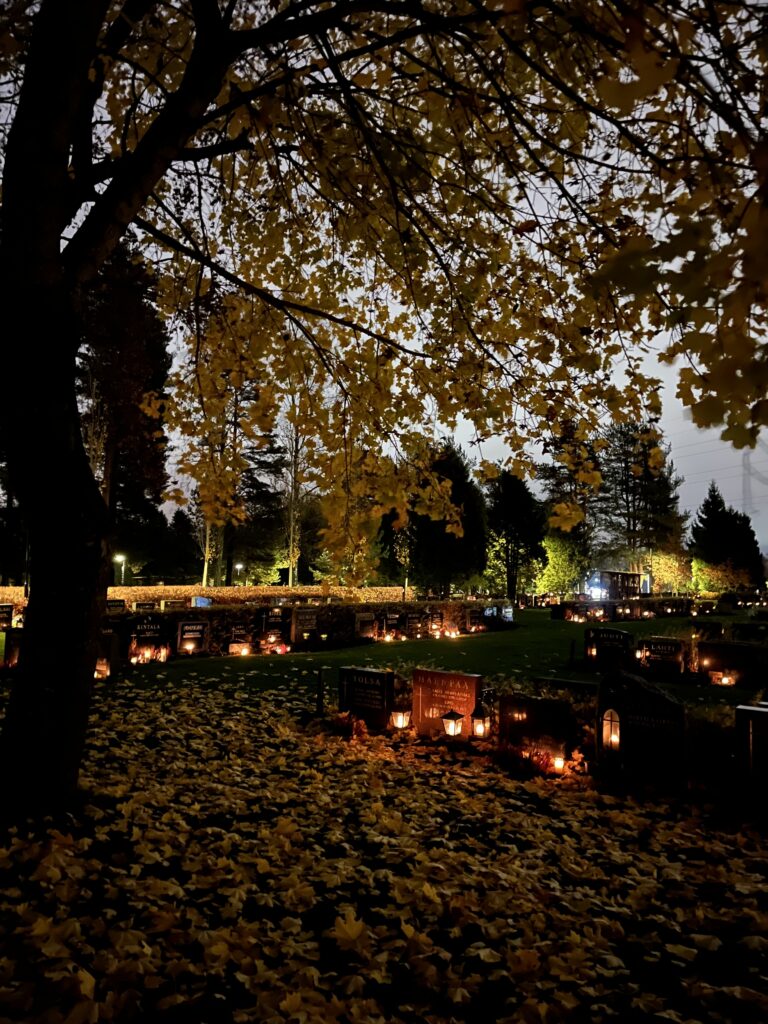
Candles on graves at the New Cemetery in Vaasa on All Saints’ Day.
According to available records, the first Halloween parties in Finland were held in the 1950s in Helsinki. The women’s section of the Disabled War Veterans’ Association organised Halloween balls at restaurants, serving as a bit of novelty in the lean postwar years. The 1957 ball turned out to be the section’s eighth and last. After that, Halloween all but disappeared from the Finnish press for decades.
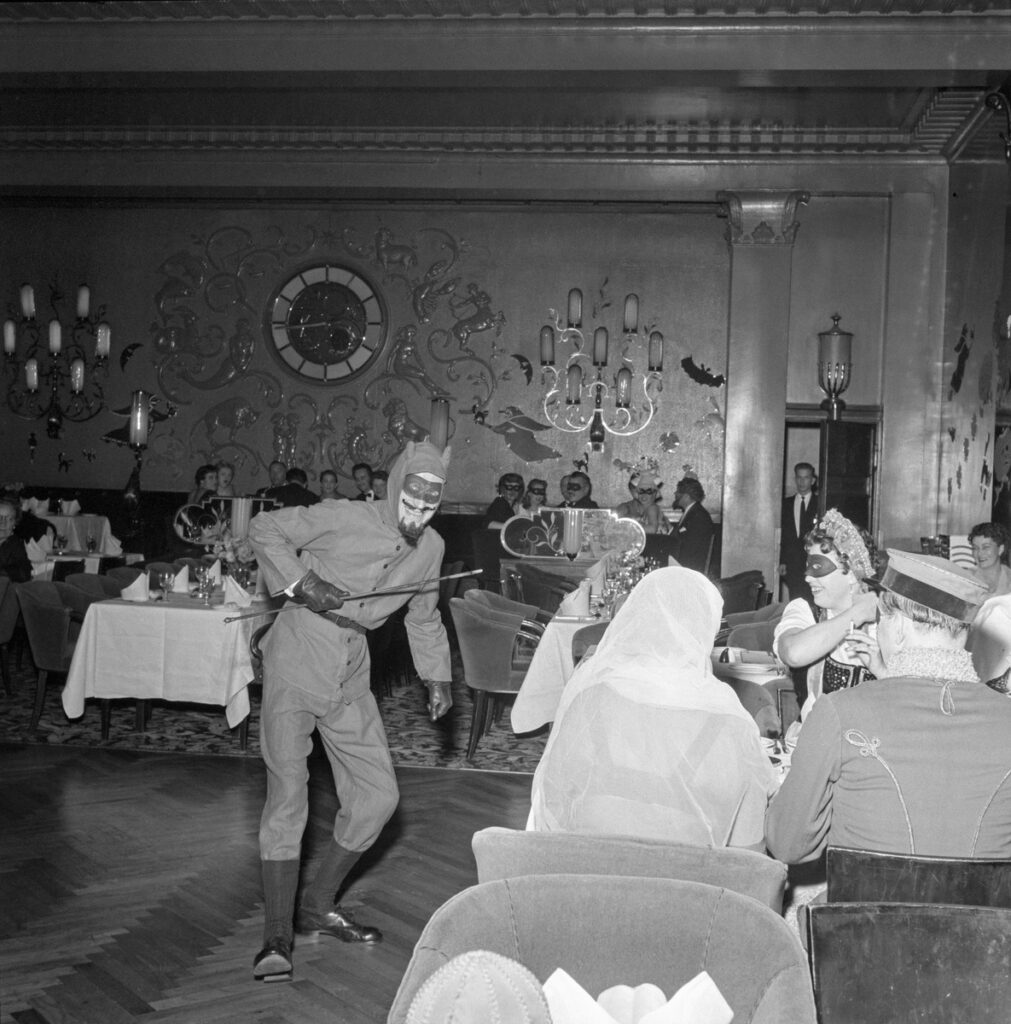
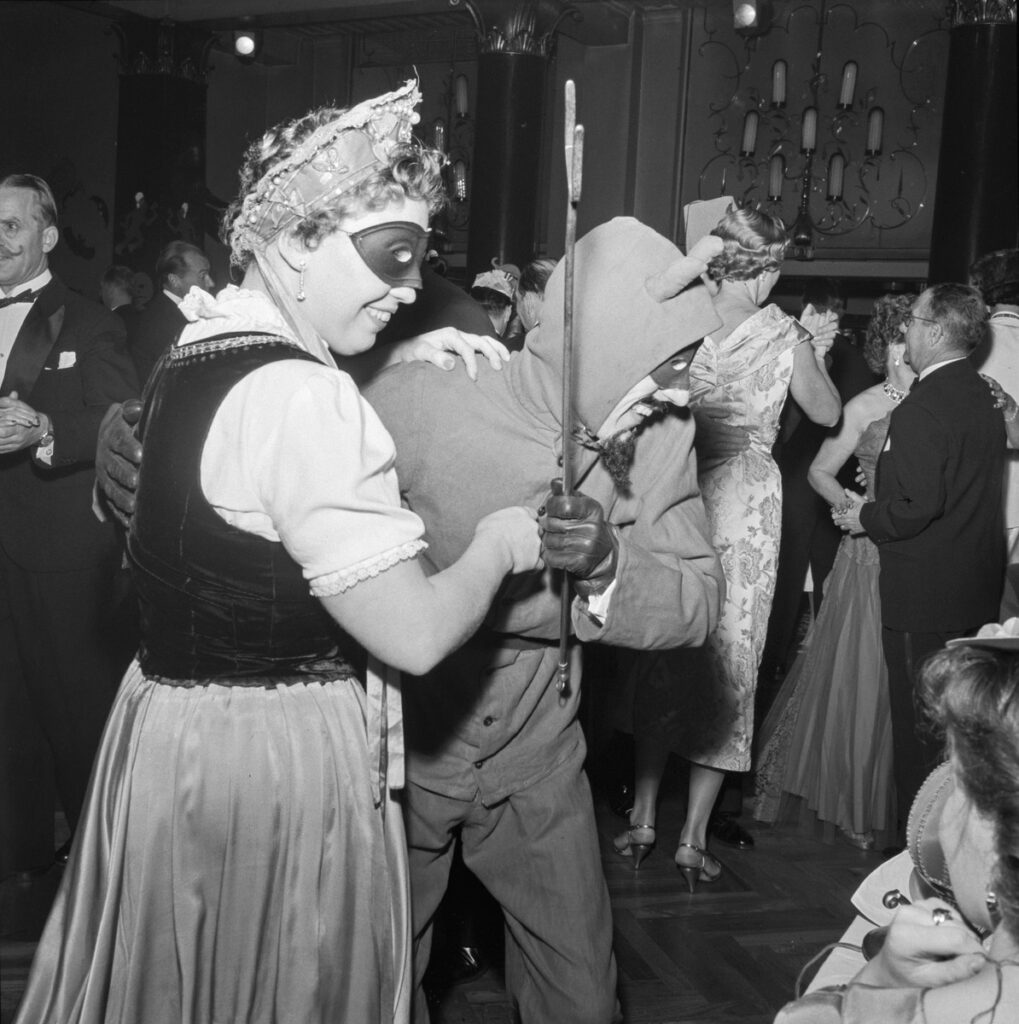
Halloween party at Restaurant Adlon in Helsinki on November 1, 1957. Source / Source. Photos: U.A. Saarinen / Finnish Heritage Agency – Journalist PR Archive JOKA.
Halloween in Finland Today
The holiday returned for real in the 1990s, mainly through American films and television. Trick-or-treating is gradually becoming more popular in Finland, though it remains far less common than in the United States, perhaps because Finnish children traditionally go door to door on Easter dressed as witches.
Today, Halloween is still not included in Finnish calendars. With All Saints’ Day also moving between late October and early November, there is no single established way to celebrate. Some dress up for costumed parties, others visit cemeteries, and many simply treat it as an ordinary autumn weekend.
Over time, ancient harvest rituals merged into new holiday traditions, but their spirit lives on. Whether through pumpkin carving, quiet candlelit remembrance, or telling tales of the ancient kekripukki, late autumn in Finland remains a unique time bridging light, shadow, and folklore.
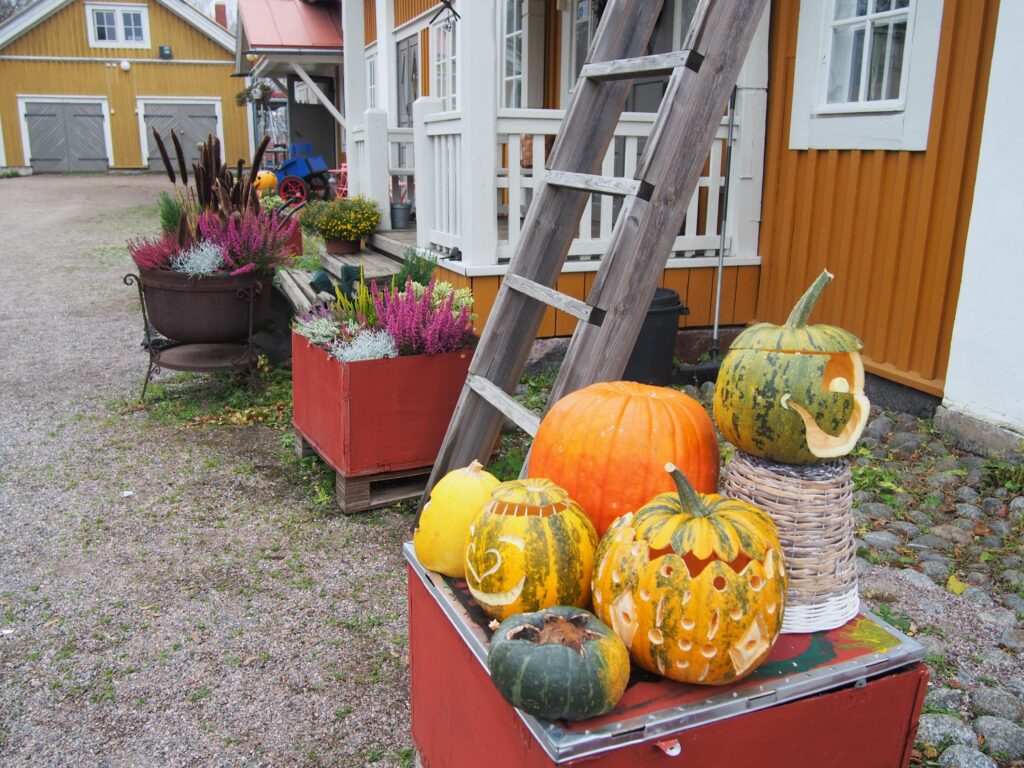
Halloween decorations at Annala Garden in Helsinki (2021). Photo: Tuula Sipilä, Kuvaussakki / Helsingin kaupunginmuseo. Source
Sources:
Franck, Minna. “Halloween in Finland.” Finnwards, October 31, 2019. https://www.finnwards.com/living-in-finland/halloween-in-finland/
Moikka Plus. “Finnish Halloween.” Moikka Plus, October 28, 2021. https://www.moikkaplus.fi/post/finnish-halloween
Heikkinen, Sammeli. “Miksi Suomessa vietetään halloweenia? Ensimmäiset merkit amerikkalaisesta kurpitsajuhlasta 1950-luvulta – taustalla kelttien samhain.” Apu, October 29, 2021. https://www.apu.fi/artikkelit/halloween-suomessa-ensihavainto-vuoden-1950-helsingin-sanomista
Ojanperä, Sini. “Halloweenista voi tulla Suomessakin kalenterijuhla, jos tarpeeksi moni niin haluaa – selvitimme, miten muutos tapahtuisi.” Yle, October 31, 2023. https://yle.fi/a/74-20057959
Sundgren, Eva. “Senhöstens fester: kekri, allhelgonadagen och halloween.” Historia Helsinki, City of Helsinki, September 14, 2026. https://historia.hel.fi/sv/helheter/evenemang-aret-runt/senhostens-fester-kekri-allhelgonadagen-och-halloween
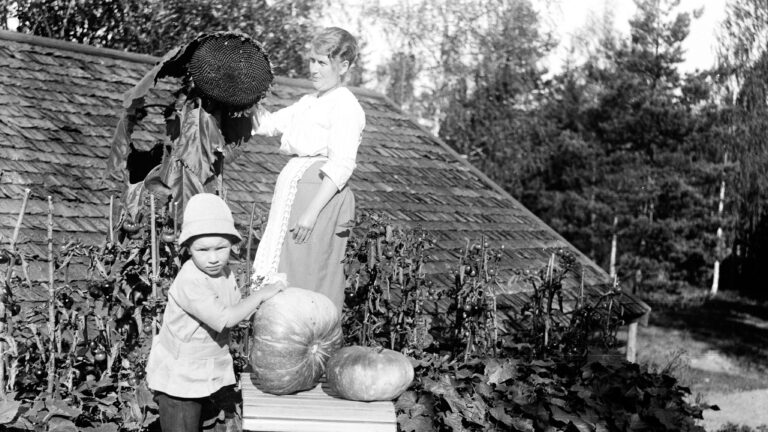
Cover photo: “Masaby produkter” (1917), depicting autumn produce in Masaby, Kirkkonummi. Photo: Bernhard Åström / Svenska litteratursällskapet i Finland. Cropped from original. Source