
Nyland
Lappträsk

Parish Records
Because parish Communion records are listed by village and farm name and because farm names often were used as a part of a person’s name, it is interesting to note the following farms. HisKi project findings were used as a starting point to identify parish villages. Then Parish Communion Records of 1880- 1889 were used to confirm villages and identify farm names. 8, 9 & 10
Sometimes parishes are named after one of its larger villages. The village of Lappträsk appears in the early 1812-1822 Lappträsk parish records. But, the village of Lappträsk is not listed in the later parish records of 1880-1889.
Farm names listed in Lappträsk in 1812-1822 are listed in the 1880-1889 records under the village of Ingermansby. Ingermansby was not a village in 1812-1822. I conclude that Lappträsk village was renamed to Ingermansby by 1880..
This map of Lappträsk Parish from 1938 displays on the HisKi project website, made available by the Genealogical Society of Finland. 8
Parish History
- In the 1300s, Lappträsk belonged to the Pernå parish
- In 1575 Lappträsk became an independent parish through an order from Sweden’s King Johan III
Villages & Farms
-
- Jossas
-
- Markusas
-
- Farm name not listed in parish records of 1880 – 1889
-
- Ollas
-
- Ersas
-
- Antas
-
- Enwalds
-
- Brusas
- Nybondas
- Storgårds
- Nilsas
- Rosas
- Mickos
- Mattas
- Joufs
- Fiersmans
- Nissas (also #13)
- Klinckas
- Lillkolfus
- Storkolfus
- Bosa
- Husmans
- Ollas
- Jeppas
- Nissas
- Knuts
- Skäggas
- Ollas
- Jerfvas
- Kebbas
- Sjökulla
- Mattas
- Brofogdas
- Kryklings
- Sibbes
- Georgas
- Tallbacka
- Marieberg
- Sihvola
- Pietala
- Harrila
- Knuuttila
- Keisari
- Mattila
- Hemmilä
- Takala
- Kauppila
- Pekkola
- Ollila
- Rantala
- Ryynälä
- Sågars
- Eskola
- Knaapila
- Böhle
- Jussila
- Kukkila
- Suurila
- Farm name not listed in parish records of 1880 – 1889
- Farm name not listed in parish records of 1880 – 1889
- Tuomala
- Sickos
- Jordas
- Svennas
- Petas
- Rockas
- Smeds
- Ranis
- Hannusas
- Gammals
- Jordas
- Simosas
- Lassas
- Antas
- Sillvastas
- Mickos
- Lillsmeds
- Knuts
- Backas
- Markusas
- Nybondas
- Sjögårds
- Petas
- Frittas
- Skommars
- Ollas
- Skommars
- Nygårds
- Farm name not listed in parish records of 1880 – 1889
- Lillslots
- Storslots
- Jossas
- Antas
- Gammelgård
- Takajärvi
- Nygårds
- Backas
- Klemis
- Jontas
- Slätis
- Lomnäs
- Kattas
- Bottas
- Nybondas
- Pakala
- Wappula
- Äijälä
- Pessala
- Seppälä
- Krosi
- Marttila
- Raskala
- Seikkala
- Tikkala
- Hämäläis
- Kauppi
- Sihvola
- Myyrä
- Kuha
- Hannuheikilä
- Kekki
- Walkeapää
- Wilo
- Sistola
- Tyyskä
- Kukku
- Tynnö
- Yrjölä
- Thurila
- Tuomala
- Knuuttila
- Eskola
- Wähämartti
- Simola
- Korppi
- Gården
- Jakobas
- Petas
- Påvals
- Staffas
- Helgas
- Kristineberg
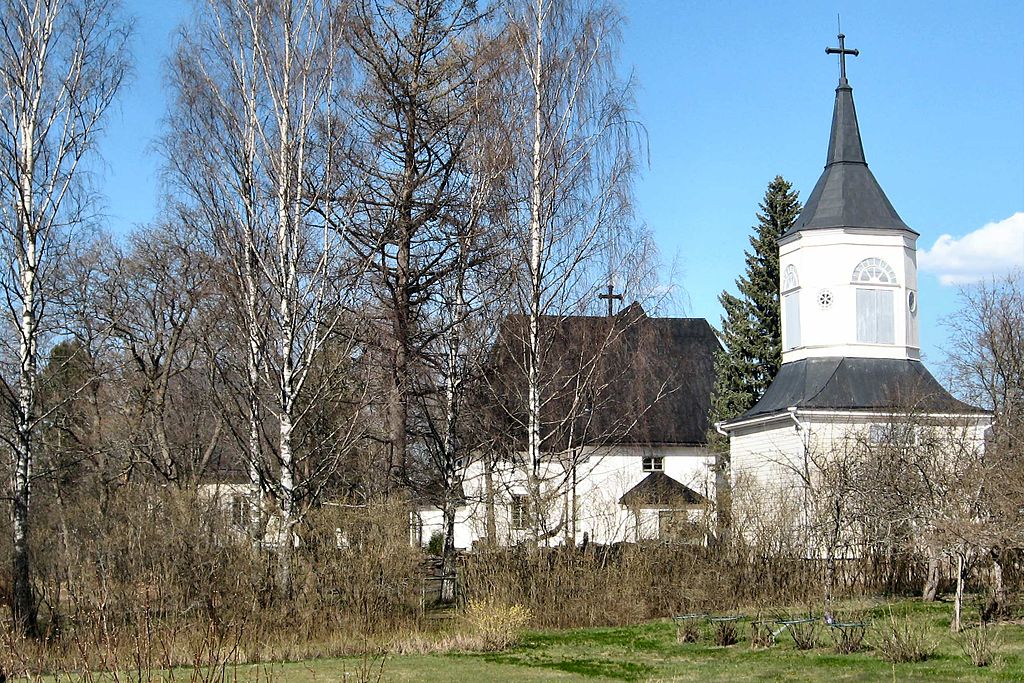
Parish Church
- The St. Lars chapel was built in the early 1400s, so that Lappträsk residents would not need to go all the way to Pyttis or Pernå to attend church
- The chapel was demolished in 1663
- At the chapel site, a new church was built. It was completed at the end of 1663
- A second church was planned to be built next to the first one
- The second church was completed in the early 1700s
- The church built in 1663 was called the Church of Sweden; the second church built in the early 1700s was called the Church of Finland
- Both churches burned down after a lightning strike on June 29, 1742
- Swedish-speakers rebuilt the Church of Sweden and Finnish-speakers, the Church of Finland
- Church of Sweden began rebuilding the summer of 1743 led by builder Jacob Bäckman
- First sermon in Church of Sweden was on July 3, 1744; consecrated 1746
- Each Swedish-speaking home contributed 55-man days, 14 logs and a large amount of other material
- Church accommodated 450 people
- Church of Finland (the smaller church) began rebuilding April of 1744 under direction of Eerikki Kikkala of Porlom
- Located next to the Church of Sweden
- Church accommodated 150 people 2,3,4 & 5
Attribution: Stahjo /CC BY-SA
(http://creativecommons.org/licenses/by-sa/3.0/) 6

Folk dress
Each parish has a unique folk dress. Parish folk dress can be recognized by its style, colors, and patterns.
Lappträsk folk dress photo used with permission of the Brage costume agency. 7
Resources:
- Lappträsk, https://en.wikipedia.org/wiki/Lapinj%C3%A4rvi_(municipality)
- Lappträsk Church, https://sv.wikipedia.org/wiki/Lapptr%C3%A4sk_kyrka
- Lappträsk Church, https://www.agricolaforsamling.fi/kyrkor-och-lokaler/kyrkor/lapptrask-kyrka
- Lappträsk Church, https://www.lapinjarvi.fi/sv/kultur-och-fritid/turism-och-fritid/kulturstigen-2/11-kyrkorna-i-lapptrask/
- Lappträsk Church, http://www.muuka.com/finnishpumpkin/churches/l/celal/church_celal.html
- Lappträsk Church Image, https://commons.wikimedia.org/wiki/File:Lapptr%C3%A4sk_Kyrkorna_2008.JPG
- Lappträsk Folk Dress image, Brage costume agency, https://www.brage.fi/sve/draktbyra/draktbyran/folkdrakter/view-163648-109
- Lappträsk Parish, Genealogical Society of Finland, HisKi project, http://hiski.genealogia.fi/hiski/aba128?en+0281
- Lappträsk Parish Communion Records, 1812 -1822, https://www.sukuhistoria.fi/sshy/index_sve.htm
- Lappträsk Parish Communion Records, 1880 – 1889, https://www.sukuhistoria.fi/sshy/sivut/HisKi-digiarkisto.php?bid=25895
[/wc_column] [/wc_row]